

Exchange Bank
Updated Fri April 3, 2026
Published Under: Community Involvement
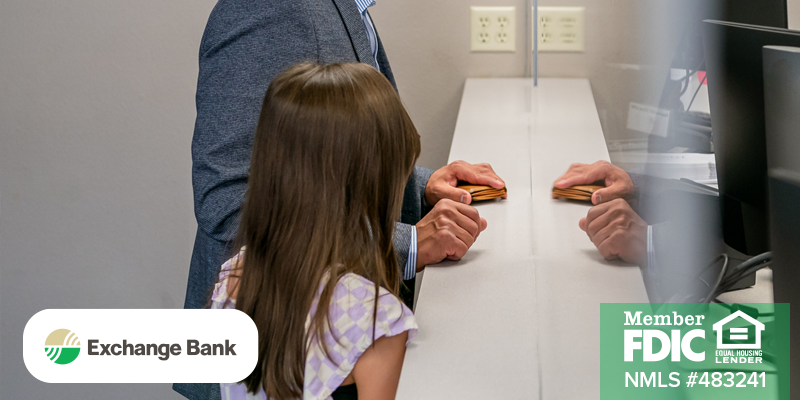
Community Banking Month is a reminder that banking isn’t just a utility, but a long‑term relationship that intersects with life’s biggest decisions. From opening your first account to planning for the future, the right bank can make those choices feel clearer and more manageable.
A community bank doesn’t try to be everything to everyone. Instead, it focuses on serving the people and businesses in its footprint, with decisions made close to home and relationships that are carried forward as life changes, showing up in both small moments and major milestones.
Below is what that kind of relationship‑based banking can look like across the stages most of us move through.
Read About...
- The First Account: Learning Money with Training Wheels
- Buying a Home (or Land): When Local Knowledge Saves Time
- Starting (or Growing) a Business: A Bank That Understands Your Real Numbers
- Raising a Family: Banking That Keeps Up with Real Life
- Planning for the Future: Turning Stability Into Long-Term Confidence
- The Common Thread: Local Relationships That Compound
- Community Banking FAQs
The First Account: Learning Money with Training Wheels
Your first checking or savings account is less about “optimizing” and more about building habits that won’t break later. Exchange Bank makes it easy to start small, understand what’s happening, and correct course without feeling judged.
What a Community Bank Adds at This Stage
Real explanations, in plain language.
When something doesn’t make sense—deposit holds, overdraft options, debit card disputes—you can talk to a real person who will walk through it step by step. That relationship-driven education is a core strength of local banking.
Tools that fit real life.
Many people want digital access and the option to handle something face-to-face. Exchange Bank's online banking tools are designed to extend access while keeping a live‑teller experience available when you want it.
Set Up Your Basics
If you’re opening your first account (or helping a teen or young adult do it), start here:
- Pick one easy-to-manage checking account for everyday spending
- Open a savings account, even if you start with $25–$50 (the point is consistency!)
- Automate a small, realistic transfer on payday
- Turn on account alerts (balance, large purchases, low balance)
- Know exactly where to get help before you need it
These habits become the foundation for everything that comes next.
Keep Reading: Just Got Paid? Here’s How to Manage Your First Paycheck
Buying a Home (or Land): When Local Knowledge Saves Time
Homebuying is a financial decision, but it’s also a logistics challenge: deadlines, documents, underwriting, appraisals, and a lot of “what happens next?” moments. The bank you choose can either make that process feel like a maze or help turn it into a plan.
Why Local Decision-Making Matters
Large institutions often rely on distant underwriting systems with rigid rules. A community bank is more likely to look at the whole picture: your work history, local market conditions, and the story behind the numbers, especially if your income or goals don’t fit a neat template.
Exchange Bank supports lending needs common in Northeast Missouri, including land purchases and loan options that reflect how people actually live and work in the region.
A Practical “Before You Apply” List
Before you start touring houses (or properties), do these three things:
- Ask for a budget reality check, not just what you qualify for, but what fits your monthly life
- Gather documentation early (pay stubs, tax returns, current debt)
- Discuss loan types that match your timeline: fixed vs. adjustable, purchase vs. construction, and how down payment options affect monthly payments
A mortgage is a long commitment. It helps when the people you’re working with are accountable to the same community you’re buying into.
You May Also Like: Advantages of Local Mortgage Lenders
Starting (or Growing) a Business: A Bank That Understands Your Real Numbers
Small businesses rarely have perfectly predictable revenue. Seasonality, equipment needs, inventory, and receivables can create uneven cash flow, even for healthy businesses.
Where Community Banking Makes a Difference
A relationship-based bank can provide context-driven guidance instead of just a yes-or-no decision. Local lenders understand what growth looks like in the communities they serve, which matters when weighing decisions such as:
- Financing equipment versus paying cash
- Expanding space versus improving efficiency
- Accepting a new contract that boosts revenue but tightens cash flow
Strengthen Your Loan Readiness
If business financing might be on your horizon this year:
- Keep business and personal accounts separate — clean records make everything easier
- Track monthly cash flow, not just profit and loss
- Be ready to explain why you’re seeking funding and how it supports growth
- Ask your lender what documentation they prefer so you prepare it once, correctly
This isn’t about jumping through hoops. It’s about giving your banker the information needed to advocate for you.
Explore Business Banking Accounts
Read More: 5 Steps to Take Mid-Year to Keep Your Business on Track
Raising a Family: Banking That Keeps Up with Real Life
Family life adds layers: childcare, school activities, vehicles, insurance, and the constant need to be prepared. At this stage, having a bank that knows you moves from “nice to have” to essential.
A community bank can help connect everyday banking with longer‑term goals like emergency savings, structured accounts, and planning tools that reduce financial stress. Exchange Bank offers options such as certificates of deposit (CDs) to set aside money with a fixed rate and timeline, useful for goals like education expenses, vehicle purchases, or planned upgrades.
Related: Emergency Fund vs. Savings Account – Why You Need Both
A Simple Family Finance System
- Build an emergency fund (start with one month of expenses)
- Create sinking funds for predictable costs like holidays or car repairs
- Use account alerts and structure to prevent surprises
- Review automatic payments twice a year to remove outdated subscriptions
Good planning isn’t complicated, but consistent.
Learn More: Emergency Fund: How Much Is Enough?
Planning for the Future: Turning Stability Into Long‑Term Confidence
As life progresses, financial priorities naturally shift. The focus moves from building momentum to protecting what you’ve built, planning for retirement, and making sure your finances remain flexible as needs change.
At this stage, a community bank relationship becomes less about transactions and more about continuity, having guidance from people who understand your history and your goals.
Practical Ways a Community Bank Supports Long‑Term Planning
Local banks can help connect everyday accounts to long‑term strategy, including:
- Choosing savings tools that match specific timelines
- Understanding how rates, terms, and liquidity affect future access to funds
- Structuring accounts to make income, expenses, and savings easier to manage in retirement
Exchange Bank offers a range of savings and deposit options that allow customers to balance growth, accessibility, and security, all of which are important considerations as priorities evolve.
Two Smart Financial Check‑Ins to Do This Year
- Review and update beneficiaries after major life changes like marriage, divorce, or the loss of a loved one
- Revisit account structure and savings strategies to ensure they still align with your income needs, risk comfort, and future plans
This stage is all about clarity and confidence. Having a bank that knows you makes it easier to adjust as life changes.
Read Next: Saving for Retirement: How Much Is Enough?
The Common Thread: Local Relationships That Compound
Rates and features matter. But over time, the biggest difference often comes down to who knows you, who can explain your options clearly, and who can make decisions with local context.
If you want a bank that can support your first account, your next move, and the plans you haven’t made yet, Community Banking Month is a great time to experience the difference of banking local. See how a community bank like Exchange Bank can support your goals—at every stage of life.
Community Banking FAQs: What People Often Ask
What makes a community bank different from a national bank?
Community banks focus on local decision‑making, relationship‑based service, and understanding the needs of the communities they serve. Decisions are often made locally rather than through distant systems.
Is a community bank right for digital banking users?
Yes. Our community bank offers online banking and mobile banking alongside in‑person support, giving customers flexibility without sacrificing personal service.
When should I talk to a banker about my financial goals?
Any time you’re experiencing a life change—receiving a tax refund, changing jobs, buying a home, starting a business, or planning ahead—is a good moment to start the conversation.
Why does local decision‑making matter when applying for a loan?
Local lenders can consider the full context of your situation, including employment patterns and regional market conditions, rather than relying solely on standardized criteria.
Can a community bank help me plan next steps even if I’m not ready to apply for anything?
Yes. Community banks often provide guidance and education before a product decision is made, helping customers clarify goals and prepare for future steps without pressure.
Are community banks only a good fit for small towns or rural areas?
Community banks serve a wide range of customers and life stages. Their advantage lies in personalized service and local understanding, not geography alone.
Member FDIC, Equal Housing Lender, NMLS# 483241
Comments